


Dubai
London
Swiss EduQua approved accelerated doctoral research programme, DBA, with the UK OfQual accredited Level 8 pathway option.
A regular DBA can be converted to to Fast-track DBA through accelerated 1 – Year intensive study.
A DBA is the highest qualification in the field of Business and Management. The DBA programme is designed for working professionals who want to further their career with a doctorate. Its primary objective is to produce graduates who will advance their professions and expand knowledge and awareness of contemporary strategic issues and practices. DBA is a combination of two qualifications at C3S Business School – UK OfQual approved Level 8 (equivalent to M Research/MPhil/ Doctoral Foundation) and Swiss EduQua approved DBA.
This C3S Business School DBA is an accelerated programme which can be completed in a year with structured online learning that can be completed anywhere. This online/blended doctoral programme gives you the opportunity to carry out research alongside your current role. You’ll live and learn the skills to dive deep into your chosen specialism, so you can take the leap into the academic world of research. You’ll develop the skills and approaches to re-energize your organization with original insights and fresh perspectives.
C3S Business School DBA combines academic excellence and outstanding research with global business connections. Add to that, exceptional skills and career development opportunities, you will find a learning experience that equips you for success in your chosen career. In addition, the qualification is well recognised and opens doors. But, most importantly, developing a solid knowledge base and establishing new linkages has presented great new opportunities for research, consulting and teaching collaborations.
Organizational Impact
The accelerated DBA is a high quality, doctoral level, research degree which has real impact in organizations and on wider policy and practice. It is undertaken by those who are focused on practice-based careers. You and your organization will benefit from dedicated research on a major, often critical, organizational issue. This should have a significant impact on your organization’s management thinking, approach, processes and profitability.
You will usually come to the programme with a broad practical question which aims to tackle a particular issue within your organization. This question will become more focused and will lead to clear findings and insights throughout the programme. The combination of a review of existing evidence, the collection of primary empirical data and engagement with practice, allows you to undertake research that will have both academic value and a real impact on practice and policy.
24 Months
160 UK Credits for Level 8
English
€6,500 /Year
All Year Around
100% Online
€300 (non-refundable)
SSBR
For many students, obtaining sponsorship from their organization is a viable option. Our experience, strengthened by the agreement of our current students and alumni, highlights that securing the support of your employer, not only boosts the overall learning experience, but also enhances future career development.
The very essence of the Executive DBA means that the supporting organization has the opportunity to capitalize on the employee’s enhanced business and leadership skills allowing future company objectives and strategies to be met.
The Executive DBA is designed to provide you with a range of transferable personal and professional skills as a basis for continuing professional development. You will develop personally by engaging in the learning required to progress through the doctorate.
The programme provides a rich developmental experience. Most students find that they undergo a transition in their thinking and approach during the programme to one that is more rigorous and evidence-based. The many skills that you acquire, or in many cases build on, are sophisticated ones that will clearly differentiate you from other managers. The skills are both derived from, and are seamlessly transferable to, ongoing business situations.
This personal development means that our DBA alumni go on to reach senior positions in their careers; sometimes moving into roles in government or starting their own consultancy business. DBA graduates might also combine this with part-time teaching roles, and, we hope, maintain their relationship with C3S Business School.
OR
You also need to:
Fill in the eligibility/apply form online, and upload your:
Write a short essay / SoP with your motivation and – if you know already – your research question.
Our unique educational approach takes you beyond business to study every topic through a global lens, master working cross-culturally, leverage disruptive technologies to shape the future, and develop the deep self-awareness needed to lead effectively and with confidence.
Essentially, this C3S Business School accelerated DBA programme is a mixture of online and residential coursework and interaction, combined with a supervisor-guided dissertation project. It is structured in a way that it can be completed in one year with a focus on the coursework components in the first Six Months and the final thesis writing (40,000) in the next Six Months.
Further, our DBA programme is specifically tailored Course, coupled with exemplary customer care and world-class supervision, ensures you have all the necessary knowledge to succeed.
The latest version of the Virtual Learning Environment – a combination of Google Classroom and a host of other tools — is designed to meet the needs of the DBA student specifically:
We also pair you with an academic supervisor who is a leading specialist in the topic you choose. Your supervisor will support you through the entire process as you develop your research idea into your final thesis. If your topic is multidisciplinary, we’ll ensure you have a team that can guide you in every area.
So to say, essentially this programme consists of two stages: the coursework stage (Level 8 programme) and the research stage (thesis writing), and both build on the learning gathered on completion of your previous qualifications and work experience.
The course stage will equip you with the knowledge and expertise needed not only to earn the UK Ofqual accredited Level 8 qualification but also develop the topic of your thesis and your understanding of the research process.
Level 8 comprises 8 units/modules to be studied but a DBA aspirant is exempted of 5 units based on mapping of relevant work experience with it.
Our online resources, tutorials, workshops and other learning processes strongly lay emphasis on Research Methods. This component presents the first step in a basic review of the nature of research and methods for business and management doctoral students. It will provide students with the practical research tools and the theoretical background for critiquing and designing research on a variety of topics. It also serves as a useful guide as to the content required in a thesis, the nature of examination for a DBA degree, and how to generate research questions and write in an appropriate ‘academic’ style.
As a learner progresses with us he or she is introduced to the discourse of Qualitative Research. This teaching component introduces qualitative research methods for business and management doctoral students. It will help students to assess the advantages and disadvantages of different qualitative methods and look at how they can combine with each other. Moreover, it provides a holistic understanding of the qualitative research process starting from outline of philosophical underpinnings to qualitative data collection, analysis and reporting.
Further, the learner is introduced to the top-end Quantitative Research discourse. This component introduces quantitative research methods for business and management doctoral students. It will provide an understanding of the different techniques available from data collection through to analysis. The course is designed as an introduction to quantitative techniques, bridging into more advanced ones with a comprehensive coverage of the most commonly used methods. The course will also train students on the use of SPSS statistical software to carry out analysis and apply the techniques covered within the course.
On completion of the Level 8 course and the submission of a viable research idea, you will commence the research stage. Here you will have the support of a dedicated supervisor to guide you throughout the development of your proposal to the final thesis. You will have loads of contact time with the supervisor; electronic communication takes place on a secure web board within your student portal and is supplemented by telephone/Zoom/Skype/GoogleTalk conversations. Your final thesis will be examined by an oral defence (viva voce) of your research.
C3S Business School offers a unique blend of academic excellence, global exposure, and a vibrant student community.
Enjoy a multicultural student lifestyle in one of Europe’s most dynamic business and innovation hubs.
Join a truly international environment with students from 40+ countries and grow your global perspective.
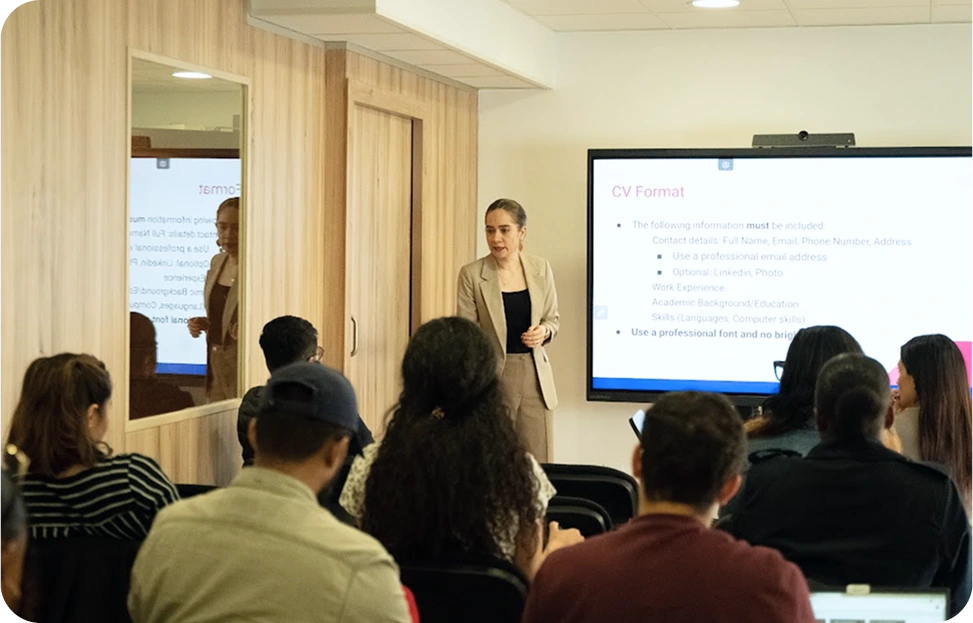
Practical learning with case studies, workshops, and projects led by faculty with global industry expertise.
Internships, 1-on-1 career guidance, networking, and job placement support to kickstart your future.
The brochure includes complete course modules, credit info, academic timelines and admission requirements.Take the next step, it’s all inside.
C3S Business School is a wonderful opportunity for me. I had a good experience in C3S business school as a BA Hons Business Management student. I highly recommend C3S Business School for education in Europe.
I like class room culture and the way faculty teach us and I have enjoyed their field trip very much
My name is ABDELGHAFOUR OUBALLA I'am writing to express my own experience with C3S, they make my dream comes True because of their efforts, they contacting me from my first email until the end, and they oriented me about documents that I need for the embassy, am so thankful for them all the administrations and the department of ADMISSION.
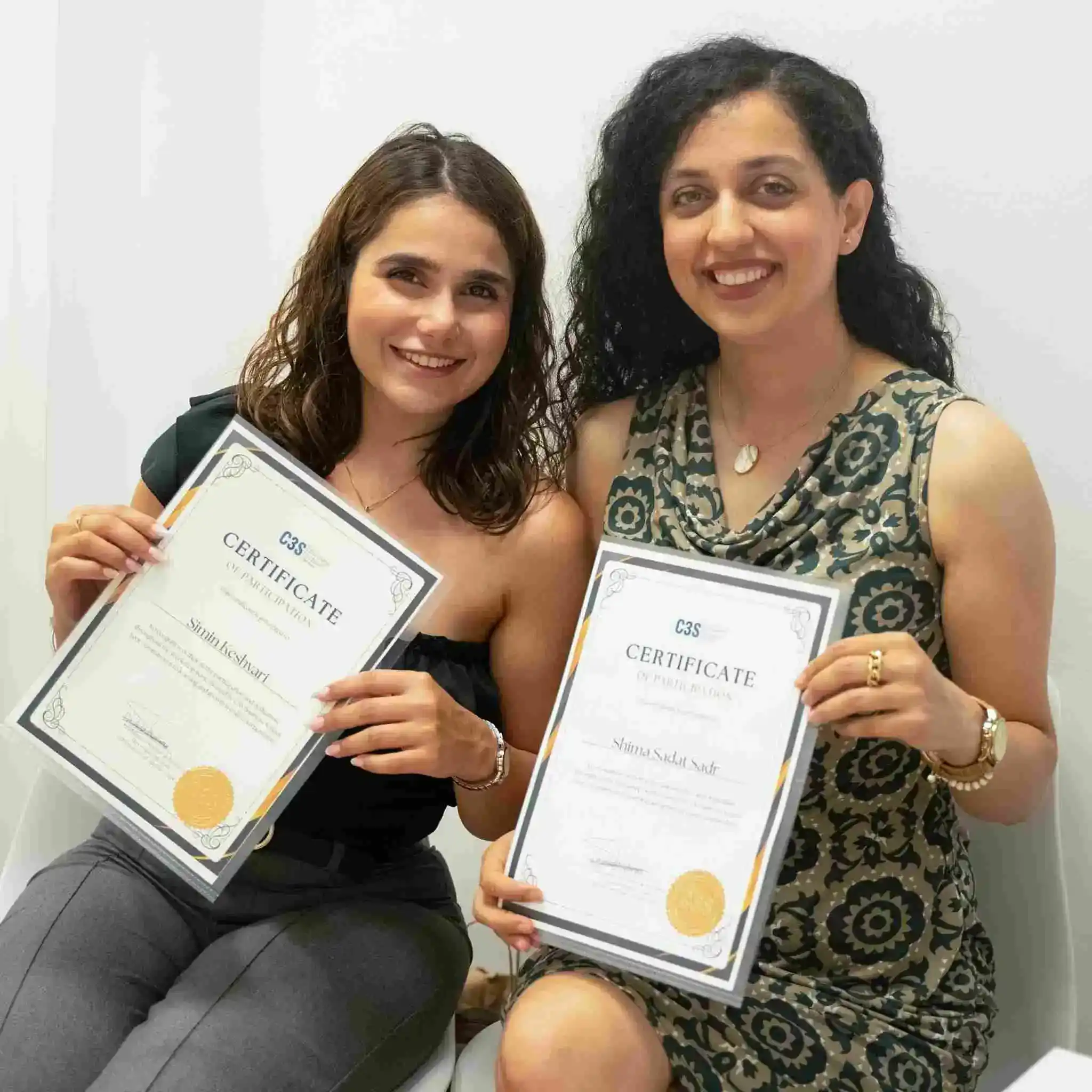
Students Gallery the best moments of our C3S business school student while their learning in campus
Registration fee: Non-refundable, paid with application : €300
Before you join us in Barcelona, here’s everything you might want to know from admissions and scholarships to your future career.
Yes, in the same way that a traditional PhD student will have a primary supervisor to oversee your project.
With this researcher-supervisor relationship, your options may be open in terms of whether you need to be based at the C3S Business School in person or if you choose to work remotely as a distance learning student, communicating with your supervisor over email or video calls.
As a DBA candidate at the C3S Business School, you will have access to the professional development programme provided by the Research Development Unit. You will be able to access training in essential skills through our programme of workshops, mentoring and coaching. A dedicated postgraduate Careers and Employability team under the Research Development Unit (RDU) will also help you with preparing the next steps in your career after the completion of your PhD.
The body of work that you submit will be read and assessed by two examiners that are experts within your subject area of research. This will be followed by the viva examination with the two examiners, in line with the conventional PhD approach. To be awarded this research degree you will need to demonstrate that your work has made an original contribution to furthering the subject knowledge within your field.
Universities will have specific guidance about factors such as how many publications you can include in your portfolio and there may be some restrictions on when they should have been published. Typically, you will include 5 publications in your submission to your PhD examiners, but this can in some circumstances be as low as 3 or 4 or as high as 10 separate papers. Most often these will be in the form of journal articles accepted by peer reviewed journals but can also include published book chapters, scientific or technical reports that have been published or other forms of publication that have gone through a level of peer review.
There is no one correct answer! Regardless of the thesis mode, the goal of doctoral study is to make an original and significant contribution to a field. How many papers it will take to meet this goal will depend on many factors. An Australian survey found that the average number of papers included in Australian thesis was 4.5, but this ranged anywhere from one to 12 papers. Publishing in itself is not a guarantee of conferral of your degree, and quality may be more important than quantity.
Doctoral candidates often publish with their supervisors. Supervisors have always assisted their students in the development of their traditional thesis, to differing degrees, but in the past this has gone relatively unacknowledged. Most university guidelines will require candidates to declare each author’s contribution to a paper, and thus a higher level of authorial transparency is achieved. Co-authoring papers gives doctoral students an apprenticeship in writing journal articles, as well as experience in collaborative writing and working in research teams – a regular part of an academic’s job.
Early and frank communication is important. The three co-authored papers in Shannon’s thesis were written in the beginning stages of her candidature when more hands-on support in the process of writing and publishing was needed. She was then well-equipped to write the remaining four papers alone. Margaret’s thesis was unusual as all included papers were sole authored, which was only possible as she had already co-authored two peer-reviewed papers prior to candidature.
We strongly recommend establishing clear mutual expectations between candidate and supervisor as early as possible.
The process of preparing a manuscript, submitting to a journal, waiting for reviews, attending to requests for revisions, copy editing, and final publication can be extensive in some fields. This can be very frustrating for candidates who are working to a doctoral submission deadline. It is important to check journal guidelines for their average turnaround times. Once a paper is under review, don’t be afraid to follow up politely once this time has passed.
It is also important to check your PhD-by-publication guidelines, because many universities allow the submission of papers at various stages of production, such as those still under review. This allowance is particularly helpful to ensure the inclusion of papers developed in the later stages of your candidature.
For doctoral candidates just developing their new identities as researchers, rejection can be difficult to take. The reality is that even experienced academics deal with rejection at some time, perhaps more often than they might like to admit! The important thing to remember is that rejection is a normal part of the process. The decision is not always about the quality of the paper, but its fit within that particular journal at that particular time. It is important to become familiar with any journal that you intend to submit to, including the theories and methods that are favoured, and the type of academic voice appropriate for that journal.
There are particular difficulties in developing a single submission based on multiple publications, each with their own focus, style, and format, and, as we recently explored, there are a number of favoured options for structure. Nikander and Piattoeva offer useful advice on how to use the integrating chapter to connect papers together.
There are also other issues that might arise from the transformational nature of doctoral study, where students learn while doing. For example, Margaret began to question her use of one of the informing concepts she had used in her early papers. In her subsequent work, she challenged her own simplistic use of this concept. Rather than become discouraged by the discovery of earlier flaws in our work, we understand that as researchers, we will continue to grow and cast a critical gaze over our past knowledge base. We both used the integrative chapter of our thesis to highlight these limitations, but also to make explicit the evolution in our understanding; as such, it was a very enjoyable chapter to write!
A clear advantage of DBA is that you’re submitting your thesis that has already gone through extensive assessment at C3S Business School. This means that by the time you come to defend your work at a viva voce with the degree granting body, it’s much easier. For example, the questions your examiners may ask you could be very similar to the questions you were asked by your reviewers during your initial assessment at C3S Business School and so you will already have prepared suitable responses to these.
Another advantage of this route is that it’s a much quicker way of obtaining an accelerated DBA degree; traditional DBA programmes take between three and four years from registration to completion whereas it is possible to get this DBA within one year of registration with the C3S Business School. The shorter duration means that you might have to pay only one year of TUITION fee, meaning that this approach is cheaper than a traditional method.
Find answers to the most frequently asked questions (FAQs) that prospective students ask about C3S Business School, Barcelona Spain
As an international business school, our mission is to prepare future leaders to embark in the real business world. We are continuously improving in offering the best quality education to enhance and develop 21st century skills. C3S Business School welcomes students from all over the world and considers diversity as one of its greatest assets.
Dean