


Dubai
London
Dubai
London
A PhD by Portfolio/ Published or Creative Work is designed for individuals with an existing portfolio of published work addressing a central research question. A PhD by Portfolio programme can be completed within one year. This degree will be awarded to a candidate who has critically investigated an approved topic and demonstrated an understanding of research methods appropriate to the chosen field. A submission for PhD by Published or Creative Work may comprise of academic papers, chapters, and monographs, scholarly editions of texts, creative practice, artefacts, or curatorial production.
This PhD option is particularly well suited to professionals who have been developing a research career and whose research skills and academic expertise are already at doctoral level. Our PhD by prior publication/portfolio will typically take one year. Ph.D. degree is offered by our Swiss EduQua approved awarding body partner which is in consonance with many such other universities such as University of Warwick, Glasgow, Birmingham, Leeds, Reading, Surrey, East Anglia, Bristol, etc. The doctoral research submission will involve a series of articles usually with a common theme that are published in scholarly, peer-reviewed journals to meet the requirements for the degree, in lieu of presentation of a final dissertation.
12 Months
240 ECTS (Each project for 80 ECTS)
English
€6,500 /Year
All Year Around
100% Online
€300 (non-refundable)
SSBR
It is a much quicker way of obtaining a PhD degree; traditional PhD programmes take between three and four years from registration to completion whereas you can get a PhD by publication within one year of registration with the University or awarding body, assuming that you enroll on this degree having already published all the papers that you will include in your portfolio of work.
The shorter duration means that you often will only have to pay for one year of awarding body fee, meaning that this approach is cheaper than a traditional method. It’s often possible that you can work any part-time job alongside preparing your publication portfolio for viva examination submission.
Our unique educational approach takes you beyond business to study every topic through a global lens, master working cross-culturally, leverage disruptive technologies to shape the future, and develop the deep self-awareness needed to lead effectively and with confidence.
Essentially, this C3S Business School accelerated DBA program is a mixture of online and residential coursework and interaction, combined with a supervisor-guided dissertation project. It is structured in a way that it can be completed in one year with a focus on the coursework components in the first Six Months and the final thesis writing (40,000) in the next Six Months.
Further, our DBA program is specifically tailored Course, coupled with exemplary customer care and world-class supervision, ensures you have all the necessary knowledge to succeed.
The latest version of the Virtual Learning Environment – a combination of Google Classroom and a host of other tools — is designed to meet the needs of the DBA student specifically:
We also pair you with an academic supervisor who is a leading specialist in the topic you choose. Your supervisor will support you through the entire process as you develop your research idea into your final thesis. If your topic is multidisciplinary, we’ll ensure you have a team that can guide you in every area.
So to say, essentially this program consists of two stages: the coursework stage (Level 8 program) and the research stage (thesis writing), and both build on the learning gathered on completion of your previous qualifications and work experience.
The course stage will equip you with the knowledge and expertise needed not only to earn the UK Ofqual accredited Level 8 qualification but also develop the topic of your thesis and your understanding of the research process.
Level 8 comprises 8 units/modules to be studied but a DBA aspirant is exempted of 5 units based on mapping of relevant work experience with it.
Our online resources, tutorials, workshops and other learning processes strongly lay emphasis on Research Methods. This component presents the first step in a basic review of the nature of research and methods for business and management doctoral students. It will provide students with the practical research tools and the theoretical background for critiquing and designing research on a variety of topics. It also serves as a useful guide as to the content required in a thesis, the nature of examination for a DBA degree, and how to generate research questions and write in an appropriate ‘academic’ style.
As a learner progresses with us he or she is introduced to the discourse of Qualitative Research. This teaching component introduces qualitative research methods for business and management doctoral students. It will help students to assess the advantages and disadvantages of different qualitative methods and look at how they can combine with each other. Moreover, it provides a holistic understanding of the qualitative research process starting from outline of philosophical underpinnings to qualitative data collection, analysis and reporting.
Further, the learner is introduced to the top-end Quantitative Research discourse. This component introduces quantitative research methods for business and management doctoral students. It will provide an understanding of the different techniques available from data collection through to analysis. The course is designed as an introduction to quantitative techniques, bridging into more advanced ones with a comprehensive coverage of the most commonly used methods. The course will also train students on the use of SPSS statistical software to carry out analysis and apply the techniques covered within the course.
On completion of the Level 8 course and the submission of a viable research idea, you will commence the research stage. Here you will have the support of a dedicated supervisor to guide you throughout the development of your proposal to the final thesis. You will have loads of contact time with the supervisor; electronic communication takes place on a secure web board within your student portal and is supplemented by telephone/Zoom/Skype/GoogleTalk conversations. Your final thesis will be examined by an oral defence (viva voce) of your research.
The doctoral degree of Doctor by Publication is awarded by the C3S Business School partner Swiss EduQua approved awarding body after the successful presentation of prior output and a covering document of 60,000 words, and an examination. The programme has 240 ECTS (European Transfer Credit System).
Course Units:
3 projects to be completed normally in 1 year, but can be extended.
Project 1 – Leadership and Strategic Management
Project 2 – Problem-Solving and Decision-Making
Project 3 – Specialist Area (Finance, HR, Marketing, Management, Operations, Accounting) Each project is worth 80 ECTS credits.
Flexible programme
We have intakes throughout the year, unlike typical universities. All of the programmes are completely customizable, allowing you to work at your own pace and convenience.
Word length for the PhD thesis varies according to discipline, in our context, it is usually expected to be some 60000 words; it will include substantial published work and an introductory section. On completion it will be the subject of an oral examination, in which you will show how you have:
These materials will be accompanied by a commentary or reflective essay, which outlines your work’s coherence, significance and contribution to knowledge, and you’ll be examined through an oral defense of your research, known as a viva voce.
Peer-reviewed academic papers, complete books or chapters in anthologies, and any other materials accepted for publication, exhibited or performed are all eligible. You’ll have to submit these materials for examination between 6-12 months after registering with us.

After completing an MBA, graduates can pursue senior management roles as Operations Director, leading organizations across various sectors. They are also equipped for strategic positions like Business Consultant, Marketing Director, or Entrepreneur, driving growth and innovation.
The doctoral degree of Doctor by Publication is awarded by the C3S Business School partner Swiss EduQua approved awarding body after the successful presentation of prior output and a covering document of 60,000 words, and an examination. The program has 240 ECTS (European Transfer Credit System).
Course Units:
3 projects to be completed normally in 1 year, but can be extended.
Project 1 – Leadership and Strategic Management
Project 2 – Problem-Solving and Decision-Making
Project 3 – Specialist Area (Finance, HR, Marketing, Management, Operations, Accounting) Each project is worth 80 ECTS credits.
Flexible program
We have intakes throughout the year, unlike typical universities. All of the programs are completely customizable, allowing you to work at your own pace and convenience.
Word length for the PhD thesis varies according to discipline, in our context, it is usually expected to be some 60000 words; it will include substantial published work and an introductory section. On completion it will be the subject of an oral examination, in which you will show how you have:
These materials will be accompanied by a commentary or reflective essay, which outlines your work’s coherence, significance and contribution to knowledge, and you’ll be examined through an oral defense of your research, known as a viva voce.
Peer-reviewed academic papers, complete books or chapters in anthologies, and any other materials accepted for publication, exhibited or performed are all eligible. You’ll have to submit these materials for examination between 6-12 months after registering with us.
C3S Business School offers a unique blend of academic excellence, global exposure, and a vibrant student community.
Enjoy a multicultural student lifestyle in one of Europe’s most dynamic business and innovation hubs.
Join a truly international environment with students from 40+ countries and grow your global perspective.
Practical learning with case studies, workshops, and projects led by faculty with global industry expertise.
Internships, 1-on-1 career guidance, networking, and job placement support to kickstart your future.
The brochure includes complete course modules, credit info, academic timelines and admission requirements.Take the next step, it’s all inside.
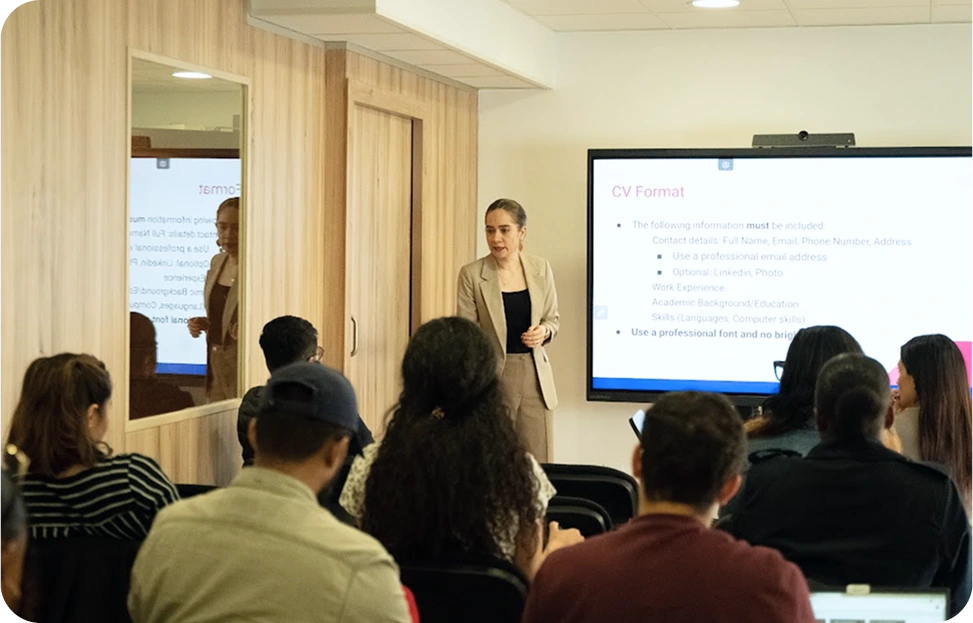


C3S Business School is very good school with a very nice location, they have been helping me since my application and also with my visa and even when I got here, they also helped me with my residence permit and accommodation.The communication as been unbelievable, I have been talking to Anny about 5 months before my arrival and she has been very helpful, she answers all my questions almost immediately,which also made moving into Spain very easy being the first time I am leaving my country.
Helpful people, nice location and a rich programs
Excellent services






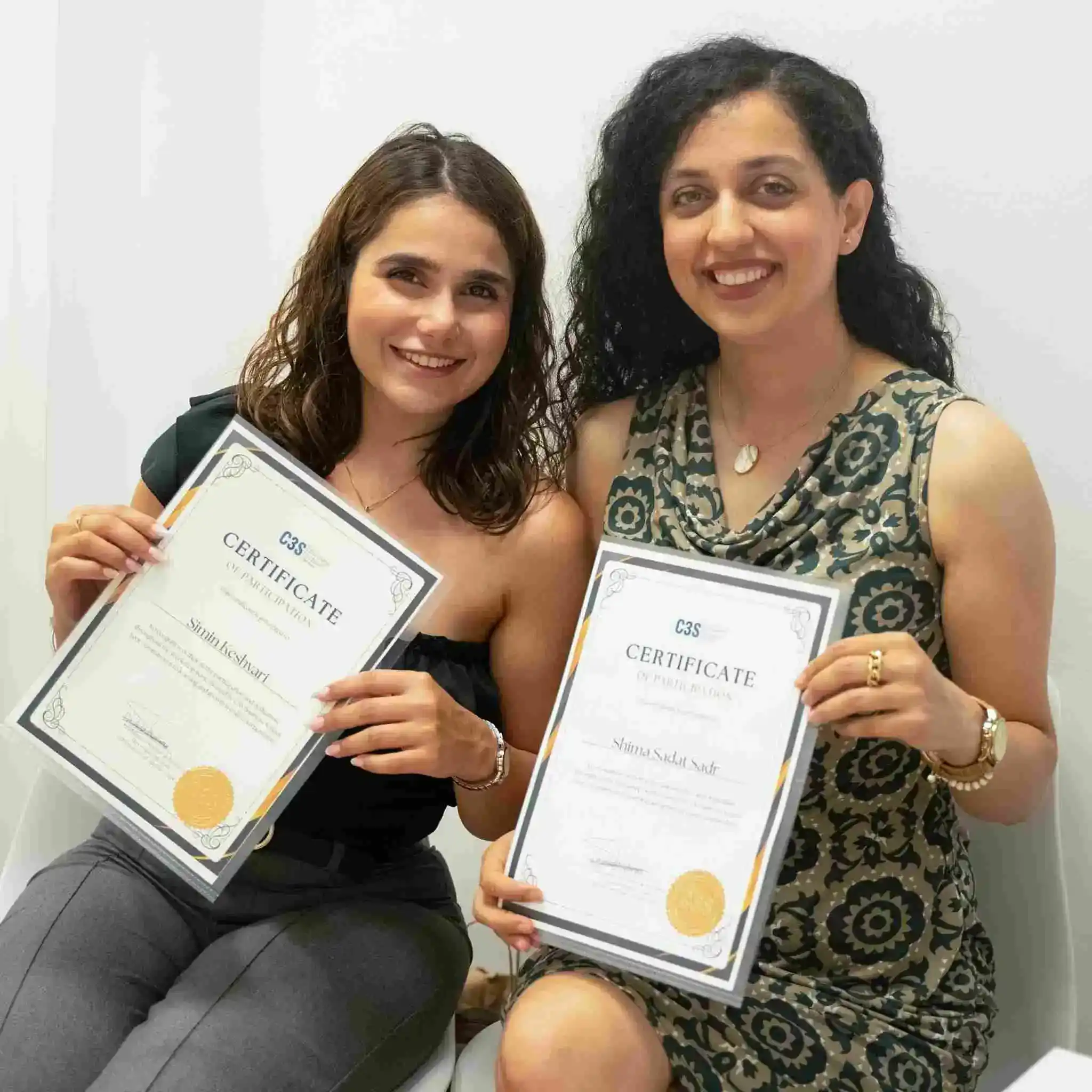
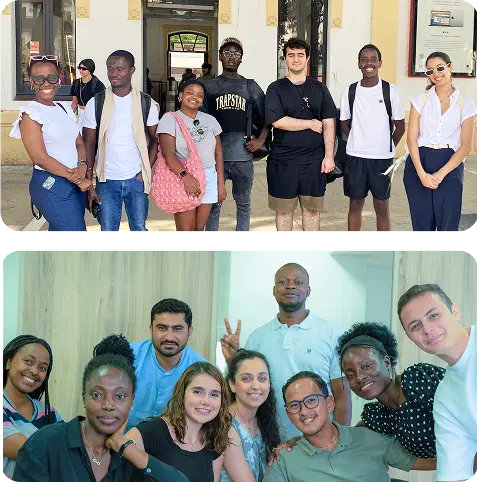
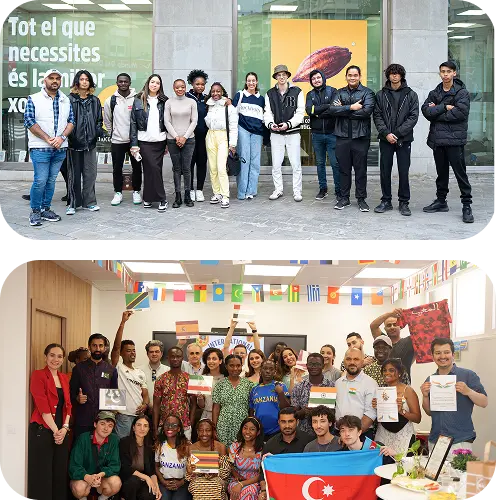
Students Gallery the best moments of our C3S business school student while their learning in campus






Registration fee: Non-refundable, paid with application : €300
You apply with C3S Business School using the standard process required by the awarding body to enroll, in the same way as the traditional route of a PhD. In addition, however, you will be asked to submit a portfolio of your prior publication track record and a supporting statement outlining the work of these existing publications, detailing how they tell a coherent story with the relevant subject area you’re applying to. You won’t need to submit a formal PhD research proposal as most, if not all, of the research should already have been completed.
If your application is successful, you will be assigned one or more supervisors who will advise on which of your publications should form your final submission to be examined and how your commentary should be written. The commentary describes the aims of the research you’ve undertaken to produce your publications, incorporates an analytical discussion of the main results and puts the total work submitted in context.
In addition to the standard application process, your application should also include a portfolio of publications, accompanied by a proposal, which contextualizes the selected publications, demonstrates their coherence and outlines the intended contribution to knowledge.
Applicants should also note the course requirement to include further contextual information with their application regarding the publications they intend to be considered. This information should include commentary on the profile of journals in which the papers have been published, the candidate’s individual contribution to each of their publications (especially for multi-author papers), the coherence of the papers as a single body of work and the significance to the field of the research contribution that they made.
Your application will be considered by a College panel, which will assess the quality and the coherence of your publications and your proposal, and if the panel wishes to take your application further, it will invite you to interview, following which you will receive a decision.
Yes, in the same way that a traditional PhD student will have a primary supervisor to oversee your project. The role of the supervisor will be to help you establish a clear narrative for the theme you’re putting together of your publications, offering critical appraisal where necessary.
He or she will advise you on how to structure the introductory and concluding bodies of work that are required before you submit your portfolio for external examination and viva. Remember that the supervisor is there to advise and not tell you how to structure your dissertation; this is the same for any research student doing a standard PhD.
With this researcher-supervisor relationship, your options may be open in terms of whether you need to be based at C3S in person or if you choose to work remotely as a distance learning student, communicating with your supervisor over email or video calls.
As a PhD candidate at the C3S, you will have access to the professional development programme provided by the Research Development Unit. You will be able to access training in essential skills through our programme of workshops, mentoring and coaching. A dedicated postgraduate Careers and Employability team under the Research Development Unit (RDU) will also help you with preparing the next steps in your career after the completion of your PhD.
As a PhD candidate at the C3S, you will have access to the professional development programme provided by the Research Development Unit. You will be able to access training in essential skills through our programme of workshops, mentoring and coaching. A dedicated postgraduate Careers and Employability team under the Research Development Unit (RDU) will also help you with preparing the next steps in your career after the completion of your PhD.
Universities will have specific guidance about factors such as how many publications you can include in your portfolio and there may be some restrictions on when they should have been published. Typically, you will include 5 publications in your submission to your PhD examiners, but this can in some circumstances be as low as 3 or 4 or as high as 10 separate papers. Most often these will be in the form of journal articles accepted by peer reviewed journals but can also include published book chapters, scientific or technical reports that have been published or other forms of publication that have gone through a level of peer review.
There is no one correct answer! Regardless of the thesis mode, the goal of doctoral study is to make an original and significant contribution to a field. How many papers it will take to meet this goal will depend on many factors. An Australian survey found that the average number of papers included in Australian theses was 4.5, but this ranged anywhere from one to 12 papers. Publishing in itself is not a guarantee of conferral of your degree, and quality may be more important than quantity.
Doctoral candidates often publish with their supervisors. Supervisors have always assisted their students in the development of their traditional thesis, to differing degrees, but in the past, this has gone relatively unacknowledged. Most university guidelines will require candidates to declare each author’s contribution to a paper, and thus a higher level of authorial transparency is achieved. Co-authoring papers gives doctoral students an apprenticeship in writing journal articles, as well as experience in collaborative writing and working in research teams – a regular part of an academic’s job.
Early and frank communication is important. The three co-authored papers in Shannon’s thesis were written in the beginning stages of her candidature when more hands-on support in the process of writing and publishing was needed. She was then well-equipped to write the remaining four papers alone. Margaret’s thesis was unusual as all included papers were sole authored, which was only possible as she had already co-authored two peer-reviewed papers prior to candidature.
We strongly recommend establishing clear mutual expectations between candidate and supervisor as early as possible.
The process of preparing a manuscript, submitting to a journal, waiting for reviews, attending to requests for revisions, copy editing, and final publication can be extensive in some fields. This can be very frustrating for candidates who are working to a doctoral submission deadline. It is important to check journal guidelines for their average turnaround times. Once a paper is under review, don’t be afraid to follow up politely once this time has passed.
It is also important to check your PhD-by-publication guidelines, because many universities allow the submission of papers at various stages of production, such as those still under review. This allowance is particularly helpful to ensure the inclusion of papers developed in the later stages of your candidature.
There are particular difficulties in developing a single submission based on multiple publications, each with their own focus, style, and format, and, as we recently explored, there are a number of favoured options for structure. Nikander and Piattoeva offer useful advice on how to use the integrating chapter to connect papers together.
There are also other issues that might arise from the transformational nature of doctoral study, where students learn while doing. For example, Margaret began to question her use of one of the informing concepts she had used in her early papers. In her subsequent work, she challenged her own simplistic use of this concept. Rather than become discouraged by the discovery of earlier flaws in our work, we understand that as researchers, we will continue to grow and cast a critical gaze over our past knowledge base. We both used the integrative chapter of our theses to highlight these limitations, but also to make explicit the evolution in our understanding; as such, it was a very enjoyable chapter to write!
A clear advantage of DBA is that you’re submitting your thesis that has already gone through extensive assessment at C3S Business School. This means that by the time you come to defend your work at a viva voce with the degree granting body, it’s much easier. For example, the questions your examiners may ask you could be very similar to the questions you were asked by your reviewers during your initial assessment at C3S Business School and so you will already have prepared suitable responses to these.
Another advantage of this route is that it’s a much quicker way of obtaining an accelerated DBA degree; traditional DBA programmes take between three and four years from registration to completion whereas it is possible to get this DBA within one year of registration with the C3S Business School. The shorter duration means that you might have to pay only one year of TUITION fee, meaning that this approach is cheaper than a traditional method.
A clear advantage of DBA is that you’re submitting your thesis that has already gone through extensive assessment at C3S Business School. This means that by the time you come to defend your work at a viva voce with the degree granting body, it’s much easier. For example, the questions your examiners may ask you could be very similar to the questions you were asked by your reviewers during your initial assessment at C3S Business School and so you will already have prepared suitable responses to these.
Another advantage of this route is that it’s a much quicker way of obtaining an accelerated DBA degree; traditional DBA programmes take between three and four years from registration to completion whereas it is possible to get this DBA within one year of registration with the C3S Business School. The shorter duration means that you might have to pay only one year of TUITION fee, meaning that this approach is cheaper than a traditional method.
Course and seminar requirements are tailored to meet the needs and backgrounds of individual students.
All students in the PhD programme are encouraged to present at least two talks on their current research during their degree programme, as well as, attend a minimum of 5 research seminars and a one day research symposium throughout each year of enrolment. Normally, the presentation and symposium requirements can be fulfilled through the Annual Graduate Student Conference. The seminar requirement can be fulfilled by attending the C3S’s partner seminar organizations or think tank. Consideration will be given (in special cases) to attend an alternate research symposium if it is not possible to attend the C3S Annual Graduate Student Conference or the Research School’s annual programme.
Selection is based on applicants meeting the expected entry requirements, assessment of the application, successful interview, and satisfactory reference
Obviously the answer to this question very much depends on your chosen subject matter. Once you’ve worked out what doctoral programme you want to follow – you need to work out how this will help your career long term. For some PhD courses (i.e, Law) it is obvious that doctorate study can only enhance your career. However non-vocational fields of doctorate study (ie 18th century poetry) may be less likely to alter your career path or financially improve your future earning capacity. However, intellectually of course, the reward will be just as good.
The first thing you need to do is consider why it is you want to do a doctoral programme. If your motivation is dissatisfaction with your current career this may not be ideal for giving you the focus you will need to succeed in your doctorate. If, however, you are motivated towards doctorate study because you really want to improve your future career prospects and gaining this qualification will fit in with the bigger picture of your life plan – then great! This should help give you the focus and motivation to achieve a successful end result.
#1 Books
Any published book that has been published (by a company, not a self-published work!) is eligible. In some cases, a single book may be sufficient by itself.
#2 Book Chapters
Chapters written for anthologies or collections of essays are suited to being used in your portfolio. However, they are often not sufficient to stand alone, so you would need other works too.
#3 Research Papers
Research papers that have been published in journals or other peer-reviewed sources.
#4 Technical Reports
More for the science side of things – published peer reviewed technical reports are eligible.
#5 Other Published Media
Other published media can be included – things such as scholarly editions of books, or architectural plans – but this will be on a case-by-case basis.
Often, with shorter works, it is necessary to submit multiple pieces – often five to seven – to complete an entire portfolio. However, in some cases, less may be acceptable. Each of the works featured in the portfolio must be linked in some manner, and they must be consistent in theme. Unrelated works will not be allowed to count towards a PhD by publication.
Maybe you’re a freshly-baked masters student wishing to apply for a PhD but unable to justify your decision.
Or a second or third year PhD student who has already forgotten their reasons for taking on the task of doing a PhD and wants to recall them?
Or perhaps you are simply someone who is not interested in doing a PhD but wants to know why other people choose to do one…
Regardless of your future aspirations, motivation, and background, there are all sorts of reasons that you may have for wanting to do a PhD, and here are some of the most frequent ones that motivate people to apply for a PhD – see if you can recognise yourself in any of them:
Learning and solving problems is the most exciting thing in the world
Some people just want to learn, learn and learn, and then solve, solve and solve. These are the people who think that no amount of money can replace the excitement of learning something new or solving a new problem. And this is why they are inspired to do a PhD…
Learning and solving problems is the most exciting thing in the world
Hello Doctor!
Some people have the need to feel that they have achieved something in life, and want this achievement to be acknowledged officially. Being referred to as “Dr” fulfils that need on a daily basis. Such people study for a PhD to get the title.
Call me smart
Some people have the need to feel that they have achieved something in life, and want this achievement to be acknowledged officially. Being referred to as “Dr” fulfils that need on a daily basis. Such people study for a PhD to get the title.
Freedom of thought
Every PHD course has its own constraints and limitations, but it usually allows far greater freedom of thinking than many “real” jobs do. Thus, it is understandable that many people are inspired to do a PhD for this reason. Indeed, having the freedom to think about one specific topic for 3-4 years is a privilege that not many people except for PhD students can afford!
Career advancement
It’s questionable whether studying for a PhD is lucrative for future career opportunities… Some people think it is, and they do a PhD because they hope it will prove to be a boost for their career. Indeed, for those who want to become an academic, a PhD is a must. However, according to some schools of thought a PhD could actually be detrimental to career opportunities, for example in certain fields such as engineering or technology. In certain areas there are of course financial benefits to doing a PhD – check out our blog To PhD or not to PhD.
Changing the world
Idealists often choose to do a PhD because they want to change the world and make it a better place. Whereas in reality they are not very likely to change the world whilst doing their PhD, because of the time limit as well as other practical limitations. However having a PhD will make your opinion more credible and people will listen to what you have to say. Therefore, your chances to create a change in the world at some level will be higher once when the time for it comes!
Change of scene
For many people undertaking a PhD provides them with the first chance to leave their home country and live in a new and different environment. Such a new experience of freedom has intoxicating powers and may be enough to inspire someone to do a PhD!
Nothing better to do!
Some people do a PhD because they have nothing else to do. However, this may not be the wisest choice, because starting a PhD with such a weak reason is definitely not a firm basis for future success!
Find answers to the most frequently asked questions (FAQs) that prospective students ask about C3S Business School, Barcelona Spain

As an international business school, our mission is to prepare future leaders to embark in the real business world. We are continuously improving in offering the best quality education to enhance and develop 21st century skills. C3S Business School welcomes students from all over the world and considers diversity as one of its greatest assets.
Dean